
What It Costs to Build an ADU in Arizona
If you’ve been thinking about adding an accessory dwelling unit (ADU) (sometimes called a casita) on your Arizona property, it helps to know what you’re getting into before you speak with a contractor. Costs can vary substantially depending on size, design, site conditions, and how “fancy” you go with finishes. Below is a detailed breakdown of what you might expect to pay for ADU construction in Arizona (especially around Phoenix/Scottsdale), along with what influences those costs and some budgeting advice to help you avoid surprises.
Understanding ADU Construction Cost in Arizona
According to recent data, building a typical 1,000-square-foot ADU in Arizona generally falls in the ballpark of $150,000 to $300,000. For standard builds (with average finishes, not ultra-luxury), many Phoenix-area projects come in around $325 to $375 per square foot.
If you build a smaller ADU (studio or one-bedroom), or convert an existing space such as a garage, the total cost may be lower. For example:
- A studio or one-bedroom ADU (around 400–600 sq ft) often costs $140,000 to $210,000.
- A two-bedroom ADU (around 600–800 sq ft) might run $200,000 to $280,000.
- Larger ADUs (800–1,000 sq ft) or more elaborate designs can push toward $260,000 to $350,000, or possibly even more, depending on site conditions and material quality.
In some cases, a smaller ADU may not be lower in cost than a larger ADU. Due to the fixed costs of projects, the price can vary.
For reference, in broader U.S. metro areas, many ADUs fall in the $180,000–$400,000 range, especially for detached units, depending on complexity and finish level.
What Drives the Cost of ADU Building
It helps to understand why ADU costs vary so widely. Here are the main factors that influence what you’ll pay:
Size and type of ADU: Detached units generally cost more because you’re building a separate structure—foundation, roof, walls, utilities, etc. Attached ADUs or garage conversions are usually less expensive since they leverage existing structures or share walls.
Site conditions and landscaping: If your lot needs grading, soil work, retaining walls, or major landscaping changes, that can add thousands. Utility hookups (water, sewer, electricity) or electrical upgrades also affect cost. In some Phoenix-area builds, extending utilities or dealing with difficult terrain has added $3,000–$15,000 or more.
Permits, fees, and permitting process: Don’t underestimate these. For example, in Phoenix, a full set of permits, plan review, water/sewer hook-up fees, and inspection costs can run $5,000+.
Labor and local market conditions: Labor costs in Phoenix have risen over recent years due to demand. Skilled trades like plumbing, electrical, HVAC, and general construction account for a significant portion of the budget, often around 40 percent or more.
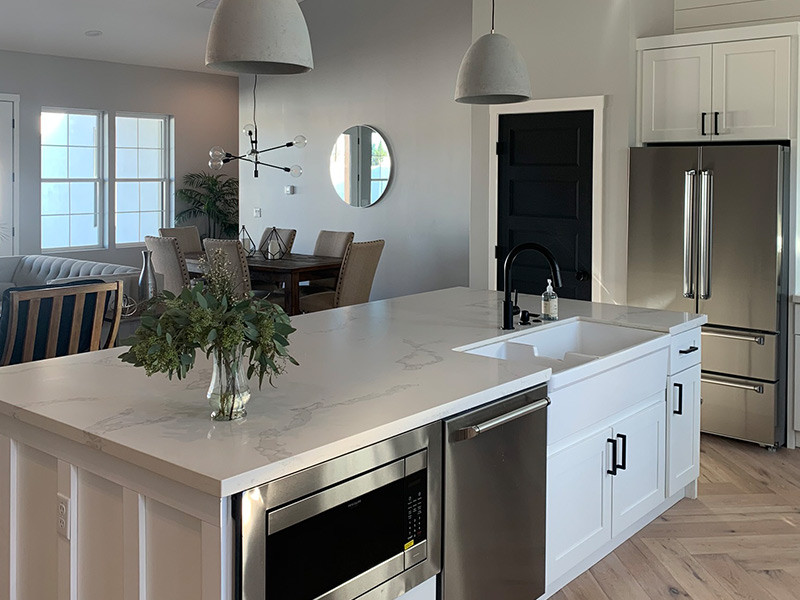
Material quality and finishes: Basic finishes (standard flooring, simple kitchen and bath) will keep costs lower. But if you want high-end materials, such as premium cabinetry, custom fixtures, upgraded HVAC, luxury flooring, that will increase the price significantly.
Design complexity and “extras”: Unique rooflines, unusual layouts, extensive decking or landscaping, custom windows, or energy-efficient systems often add cost. Also, if you want the ADU to be fully independent (with its own meter, separate entrance, full kitchen and bath), that adds more to the budget than a more basic structure.
Contingency for unexpected costs: Like any build, things come up—soil issues, inspection problems, permit delays, change orders. Most builders recommend setting aside a contingency buffer (often 10–15 percent of total budget) to avoid being blindsided.
How the Type of ADU Affects Cost
Here is a breakdown of different ADU types and rough cost expectations in Arizona (or similar U.S. markets)
| ADU Type | Typical Size / Description | Estimated Cost Range / Notes |
|---|---|---|
| Garage Conversion | 300–600 sq. ft. (existing garage repurposed) | $75,000 – $140,000 (lower structural cost, but may require utility upgrades) |
| Attached ADU / Home Addition | 400–800 sq. ft. | $125,000 – $220,000 (shares foundation or walls) |
| Detached ADU (custom build) | 600–1,200 sq. ft. (standalone) | $180,000 – $300,000+ (full structure, most flexibility) |
Typical Cost Breakdown – Where the Money Goes
When building an ADU, your investment gets distributed across several categories. Here’s a rough way to think about where your money will be spent (based on many Phoenix-area builds in 2025).
- Pre-construction (design, engineering, permits, plan review): 10–15% of total cost
- Site work and foundation: 10–20% (grading, excavation, foundation, site prep)
- Framing and structure: 15–20%
- Exterior finishes (walls, roof, siding, windows): 10–15%
- Mechanical / Electrical / Plumbing (MEP): 15–20%
- Interior finishes (flooring, cabinetry, fixtures): 15–25%
- Miscellaneous and contingency (unexpected costs, landscaping, permits, fees): 8–12%
Typical ADU Costs Around Phoenix / Maricopa County in 2025
Because you are in Scottsdale (or nearby), it is especially relevant to consider examples local to Phoenix / Maricopa County. According to a recent Phoenix ADU cost guide, typical pricing in 2025 is:
- Studio/one-bedroom ADU (400-600 sq ft): $140,000–$210,000
- Two-bedroom unit (600-800 sq ft): $200,000–$280,000
- Larger ADU (800-1,000 sq ft): $260,000–$350,000
In those Phoenix builds, the cost per square foot for standard finishes is about $325 to $375.
Helpful Strategies to Manage Your ADU Budget
If you want to keep costs under control while building a functional and attractive ADU, consider the following approaches:
- Stick to a smaller footprint: A well-designed 500–600 sq ft ADU might serve your needs just as well as a larger one, while keeping the budget lower and making it easier to manage utilities.
- Consider attached or garage-conversion ADUs: They leverage existing structures and often avoid the expense of full foundation or separate utilities.
- Choose simple, efficient designs: Avoid overly complex roof lines, custom walls, and extravagant architectural features that add cost.
- Use standard-quality finishes: For areas like flooring, cabinetry, and fixtures. You can always upgrade later if needed.
- Bundle utilities and plan carefully for site work: If your property already has water/sewer/electric easily accessible, build close to existing connections to avoid expensive trenching or hookups.
- Request multiple bids and a detailed breakdown: Invite at least three contractors to bid separately for structure, permits, finish work, and utilities so you can compare apples to apples.
- Set aside a contingency fund (10–15 percent) for unexpected costs: especially helpful in Arizona where site conditions (soil, grading, utilities) or city permit delays might crop up.
Why “Casita Construction” Can Be a Smart Long-Term Investment
Building an ADU (or casita) on your Arizona property can offer benefits beyond just extra space. Here are a few reasons homeowners often find the investment worthwhile:
- Additional rental income potential: A well-built ADU can bring in rental income, helping offset mortgage or maintenance costs. In a market like Phoenix where housing demand remains strong, ADUs can be particularly appealing for renters seeking smaller, affordable units.
- Increased property value: A professionally finished ADU adds value to your home. It essentially becomes a second livable unit on the same lot.
- Multi-generational living or guest housing: ADUs provide flexible living solutions that are perfect for extended family, aging parents, or guests, all without sacrificing privacy.
- Efficient use of land: Rather than expanding outward or relocating, an ADU lets you maximize your existing property footprint, especially useful if you have limited space around your main home.
Realistic Example: What It Might Cost for a Scottsdale-Area Backyard Casita
Let’s say you own a typical Scottsdale lot and want to build a ~650 sq ft detached casita (sleeping/living area, kitchen, bathroom), with standard finishes and moderate site prep.
- Base build (structure, foundation, framing, exterior, utilities): ~$210,000–$240,000 (assuming ~$330–$360/sf)
- Permits, engineering, plan review, site prep: ~$15,000–$30,000
- Interior finishes (flooring, cabinetry, fixtures), HVAC, plumbing: ~$40,000–$60,000
- Contingency and misc (grading, landscaping, unexpected costs): ~$20,000–$30,000
- Total estimate: around $285,000–$325,000
If you instead opt for a smaller unit (say, 450 sq ft) or convert an existing structure, costs could be significantly lower — potentially in the $180,000–$220,000 range.
Essential Questions to Ask Before Starting Your ADU Project
Before you commit, make sure you investigate these items carefully. They often make the biggest difference between a smooth build and cost overruns:
- Does your city / county zoning allow an ADU on your lot? (Setbacks, lot coverage, parking, utility hook-up requirements)
- Are there existing utility connections near where you plan to build?
- What is the soil like? Will the foundation require special work or grading?
- What level of finishes do you want (basic vs. upgraded)?
- Do you have a realistic contingency budget?
- Have you accounted for permit fees, plan review, impact fees, and inspections?
- Have you solicited multiple bids and compared them in detail (structure, utilities, finishes, contingency)?
The Bottom Line: What to Expect If You Build a Casita in the Phoenix Area
If you want to build an ADU or casita in Arizona, especially in the Phoenix/Scottsdale area, you should plan on spending somewhere between $150,000 and $300,000 for a mid-sized unit. For many homeowners, a realistic budget lands in the $200,000–$320,000 range once you factor in site work, permits, utilities, and finishing touches.
While that may seem like a significant investment, a properly designed ADU can offer substantial value, whether it’s through rental income, added home value, and flexibility for family or guests. However, because costs depend so heavily on design choices, site conditions, and local regulations, it is important to plan carefully, gather detailed bids, and include a buffer for surprises.